
Small Farm Innovation Challenge
The Innovation Challenge invites farmers, entrepreneurs, students, hackers and any ingenious, farm loving thinkers to propose tech based innovations that will help small scale agriculture compete, survive and thrive.
Apply before December 31st
Who is this for?
DIY
No idea is too simple! You've welded, repurposed, coded, or jerry-rigged your way to a small farm solution and you want to share it with the world. This challenge category is for all you open-source, tinkering, do-it-yourself innovators.
Software
You've got a new marketable product or business idea designed to help solve one of the many software challenges facing small farms today. Software is used by a computer.
Hardware
You've got a new marketable product or idea designed to help solve one of the many hardware challenges facing small farms today. Accepting any stage of development. Hardware is a tool, machinery, or other durable equipment.
Social Innovation
You've developed or improved upon a system, process, or design principle that takes innovation to the next level. Think of this category as a social good or something that benefits the commons.
Learn More
Farmers need right-sized technology.
Tools and technology can help farmers improve efficiency, save labor and connect with their customers. But many of the innovations in agriculture today are being built for large-scale production, out of reach for most family farms all while contributing to ecological degradation and yet more consolidation in the industry, perpetuating a vicious cycle. Despite America’s technological progress, every day 4 farms go out of business. Creeping ever-upward at an alarming rate, the average age of farmers has now surpassed 60. Meanwhile, many of those farms that do stay afloat are doing so at a loss. Over half of our nation’s farms report negative net income. Coupled with a “get big or get out” ideology, it would seem that technology has left smaller farms behind, all to the detriment of rural economies, social equity and even the health, sustainability and quality of our food. But does it have to be this way?
We envision a landscape where appropriate technology for small farms is understood by all AgTech stakeholders and more investment is focused towards the needs of small-scale producers. This Challenge works to increase access to appropriate technologies for the small farmer and to support innovators in expanding access to their products/services, especially for those looking to sell, scale, or expand overall knowledge sharing and partnerships.
Whether you’re an engineer, a crafty farmer, a startup, or a team of high school students, we’re challenging you to share or develop a new innovation that can help smaller-scale farms compete, survive and thrive. From hardware to software, mechanical harvesters to marketing apps, we’re seeking proposals for technologies that will help level the playing field, strengthen local food systems and promote on-farm sustainability. Submissions will be evaluated by a panel of judges representing farmers, investors, entrepreneurs and the tech industry. Winners will be showcased at the Small Farms Conference as well as at several other agricultural conferences, in video and online with the aim of helping shine a light on your innovation and you make your bright idea a reality.
This Challenge is open to global submissions and can include individuals, teams, students and start-up businesses. Please note that the bulk of promotion and recognition will take place in California, which is the nation’s largest agricultural state producing over 400 commodities at nearly $50 billion.
Winners will be announced in February. Current and previous winners of the Challenge will also be invited to showcase their innovation at in-person events as available.
Submissions will be accepted in any phase of development but must be received before the deadline and only completed applications will be reviewed. Please only submit one submission per applicant/company. We strongly encourage the innovator themselves to provide the information. You may reapply every year.
CAFF will be screening for any AI use. Please use it sparingly, if at all, as it will negatively impact your application. Conceptual ideas should fully utilize the video and audio recordings, with attached diagrams, etc to document your idea.
Submissions will be judged by CAFF staff and selection committee members based on the attributes below. Please read “SELECTION” for more details.
- Long-term relevance
- Fits the overall spirit of the competition
- Quality and clarity of supporting documents
- Viability
- Provides solutions to the common challenges experienced by farmers
- Novelty
- Promotes the economic viability of smaller-scale farm businesses
- Adaptability to a variety of farm systems and circumstances
- Repairable / adjustable by user
- Ease of use
- Promotes ecologically sustainable farm practices
- Increases farm capabilities for business management, marketing, and access to local food economies
The winner of the 2019 Small Farm Innovation Challenge was The Farm Hand Tractor.
2022 winners featured HarvestPath, Hand-E, and the No-dig Removable Endpost.
Please see the main page to see all previous winners.
Examples of Relevant Categories and Farmers Needs:
- Harvesting and planting tools
- Labor savings & management
- Soil management & monitoring
- Sales, Inventory Management & Tracking software
- Wash & Pack
- Record Keeping
- Fencing, On-farm Energy, Livestock Management Tools
- Poultry Equipment
- Irrigation & Water Systems
- Season Extension, Crop Storage
- Weeding Tools
- Tech that supports the human body (preventing injury, access, etc)
Submissions will be accepted through our online application portal and must be received before the deadline. Application portal opens in October.
DIY Innovators: You’ve welded, repurposed, coded, created a spreadsheet, or jerry-rigged your way to a small farm solution and you wanna share it with the world. Big or small, this challenge is for all you open-source, tinkering, do-it-yourself innovators. We are looking for innovations that are reproducible, affordable, and accessible to other farmers. Submit what you’ve got!
Software Innovators: You’ve got a new product or business idea designed to help solve one of the many software challenges facing small farms today. Whether it’s a concept, or you’ve already created it, this is the challenge for you!
Hardware Innovators: You’ve got a new product or business idea designed to help solve one of the many hardware challenges facing small farms today. Whether it’s a concept, prototype or in final development, this is the challenge for you!
Social Innovators: You’ve developed or improved upon a system, process, or design principle that takes innovation to the next level. Think of this category as a social good or something that benefits the commons.
For those looking to commercialize, we’d like to see innovations that can scale, have clear customer bases, are relatively unique or done in a very different way, and have strong leadership.
Please only submit one submission per applicant/company and we strongly encourage the innovator themselves to provide the information. You may reapply every year.
Multiple winners will be selected by a committee of individuals representing the small farm agricultural sector. The cash prize will be split amongst the winners.
Each application will be reviewed by CAFF staff and complete applications will move to next stage of review. Selection committee members will review applications and provide a score based on the rubric listed below.
DIY Innovators: Graded focused on overall practicality and accessibility for the small farmer. Innovations should be reproducible, provide price information, and parts should be easy to get.
Software & Hardware Innovators: Graded on readiness to tackle the more complex challenges facing the small farm community. The Innovation is a marketable product that can be scaled nationally or globally, have a clear customer base and is relatively unique.
All Applications:
- Holds long-term relevance
- Fits the overall spirit of the competition
- Supports long-term success of small scale producers vs. corporate consolidation.
- Leads to positive benefits to health of planet and people vs continued resource extraction and ecological degradation.
- Addresses growing concerns around tech and data sovereignty.
- Quality and clarity of supporting documents
- Additional clarifying documents are provided to further explain the innovation. Documents could be short videos, slides, blueprints, etc.
- Viability
- What is the demand?
- How competitive will it be in the current marketplace?
- Does ir provide solutions/relief to the challenges experienced by farmers?
- Does it save the farmer time?
- Does the innovation help alleviate pressure and challenges farmers face from drought, wildfires, shortage of labor, high costs for inputs, land access, etc?
- Novelty
- Does the product/service already exist?
- Promotes the economic viability of smaller-scale farm businesses
- Do the benefits outweigh the costs of the product/service?
- Is there product-market fit? Will there be demand from smaller-scale farm businesses for this innovation?
ADDITIONAL CRITERIA TO CONSIDER – DEPENDENT ON APPLICATION
- Adaptability to a variety of farm systems and circumstances
- Can it be applied to different production methods? Grading won’t be impacted if innovation is specialized in a particular crop or animal.
- Is it feasible for farms of any size to use?
- Repairable/adjustable by user
- Can the user can repair as needed without relying on another company?
- Can the innovation be integrated with other tools/systems that the farmer may be using?
- Can the farmer access information on how to use or improve upon the innovation so that it can better meet their needs?
- Ease of use
- Can a farmer of any skill level understand how to use it?
- Can it be applied to a farm business without a substantial need to increase resources (labor hours, inputs, new equipment, etc.)?
- Customer satisfaction: Can farmers seek technical support for this product/service if they need it?
- Can the product be modified/updated?
- Promotes ecologically sustainable farm practices
- Does it promote any of the following practices?
- Integrated pest management
- Reduces GHG emissions
- Builds soil and plant biomass (compost, no-till, etc)
- Conserves natural resources (water, topsoil)
- Cover crops, hedgerows, etc
- Integrated crop, livestock management
- Reduced fertilizer runoff
- Does it promote any of the following practices?
- Increases farm capabilities for business management, marketing, and access to local food economies:
- Will it improve market access or increase market channels?
- Does it support with increasing sales?
- Will it help build a stronger community food network?
- Can it be applied to any local food system community?
Over $10,000 in cash prizes to the winners. Additional supplemental prizes may be provided in the areas of business & marketing. Winners will receive recognition at small farm conferences, agriculture publications, etc.
Innovation Challenge winners will have the opportunity to present their innovation to a wide audience including conferences such as the Small Farms Conference. Winners will be celebrated via social media and to CAFF’s broad-based audience of farmers, agricultural and food industry professionals, and small farm advocates.
Momentum and attention gained from this challenge can help propel your innovation into new avenues and help make important connections. The winner of the 2019 Innovation Challenge, FarmHand Tractor has now made his idea a business reality and was selected as a 2021 cohort member of the business accelerator program Food System 6 and the Amiga Tractor (2023 winner) has received substantial investments from venture capital firms.
Please note that cash prize amounts depend on number of winners and vary year-to-year depending on sponsorships and fundraising.
Monica Drazba, Innovation Manager at UC ANR Innovate
Agriculture, Business development, Food Systems
Monica Drazba, MBA, has more than a decade of experience managing diversified farm operations across the United States. A proven leader in agriculture and food-system initiatives, she specializes in applied research, stakeholder engagement, and partnership development. Monica currently leads efforts in agricultural technology and innovation at UC ANR Innovate.
Michelle Duong, Farm to Institution Coordinator at Community Alliance with Family Farmers
User Experience, Business Development
Michelle supports institutional buyers in increasing their local farm sourcing. Prior to this role, she owned and operated an online food business that specialized in delivering locally and sustainably grown products to Sacramento area residents. She holds an MS in Biodiversity Conservation, and is committed to building resilient food systems by supporting the success of family farmers.
Patrick Koppula, Advisor, Coach, Fractional Executive at Innovate for Society
Innovation systems and innovation leadership
Patrick is a wide-ranging expert in innovation systems and a practitioner of innovation leadership with a background in entrepreneurship, design thinking, and systems science. Patrick earned a bachelor’s in Environmental Science and Public Policy from Harvard University, founded successful innovation economy businesses, and served as a White House Presidential Innovation Fellow. Patrick has dedicated their career to fostering innovation and collaboration that cultivates inclusive prosperity.
Having come to believe that increasing the viability of small farms will result in higher food system resilience in the face of pandemics and other emergencies, Patrick is adapting their innovation expertise to focus on the decentralized agricultural landscape. The will extend Patrick’s support of technology that empowers small-scale enterprises to thrive.
Samuel Oslund, Director of Ag Tech at 11th Hour Project
Tech development and research
Samuel focuses on supporting the development of technologies that advance agroecology and food sovereignty movements. Prior to joining the 11th Hour Project, Samuel was leading a Farm Hack initiative to strengthen international collaboration between researchers, technologists, and farmer-led organizations working on open-source agricultural technology. His background in participatory tool development is grounded in 13 years of organic farming and grassroots organizing in Montreal.
Jose Mauricio Paz Villegas, Research Associate & AgTech Adjunct Instructor, University of California Cooperative Extension & Reedly College
Plant Sciences and AgTech
[Full bio coming soon!]
Fernando M. Garcia, Project Manager at California FarmLink
Sustainable Agricultural Innovation
Fernando’s work focuses on making on-site, off-grid solar cooling available to small and medium scale farms. Aside from solar innovation, he also has a keen interest in entomology and biological control as well as ag finance.
Erica Garibay, Bilingual Ecological Farming Program Coordinator at Community Alliance with Family Farmers
Ecological Farming Practices, Resource Accessibility
Erica collaborates with Spanish-speaking growers throughout California to plan and implement various ecological farming practices, such as cover crops, compost, and hedgerows. Her work also includes resource development and helping growers to access a range of relevant Spanish-language resources. Erica was born and raised in Stockton, CA and holds a B.S. in Conservation and Resource Studies from UC Berkeley.
Arden Rosenthal, Farmer Support Specialist at Community Alliance with Family Farmers
Arden earned a B.A. in Agroecology from UC Santa Cruz and now supports small farms at CAFF navigate available resources and train farms on digital literacy. Her previous work includes farmers markets, CCOF, and working on a farm in rural Virginia.
Richard Santiago, Business Owner & Tech Education Contractor at CAFF
Tech education and business development
Richard is a business owner in the central valley with a background in farming, labor management, and agricultural technology which allows him to connect with farmers and provide practical, real world support. He supports CAFF as a Tech Education Contractor, helping small farms learn and adopt practical technology for their operations. He earned his B.S. in Agricultural Business from Fresno State University.
Rebekka Siemens, Farmer, Gonzales Siemens Family Farm
Rebekka lives and farms with her family on the same land where she grew up in the southern San Joaquin Valley. She currently stewards Gonzales Siemens Family Farm’s regenerative almond orchard and dry-farmed heritage grains. Rebekka worked with CAFF conducting an assessment of technology needs for small farms in the San Joaquin Valley
Harold Stewart, Avocado Farmer
Harold is a working farmer managing avocados, flowers, and other crops in San Diego County. [Harold’s full bio coming soon]
Elizabeth Vaughan, Tech Hub Specialist at Community Alliance with Family Farmers
Appropriate Technology for Small Farms
Elizabeth brings over 15 years of experience in strengthening healthy, just, and sustainable food systems. At CAFF she manages the Small Farm Tech Hub, supporting farmers across California with their technology and business needs. Elizabeth’s education is in business economics from UC Santa Barbara and sustainable horticulture from Cuyamaca College. She also stewards her family’s five-acre ranch located in San Diego County.
Josh Volk, Owner/Operator at Slow Hand Farm
Systems for Small Farms
Josh Volk consults, writes, and teaches workshops on vegetable production under the name Slow Hand Farm and runs Cully Neighborhood Farm, a small urban CSA farm in Portland, Oregon. He is a regular contributor to Growing For Market and the Author of the books Build Your Own Farm Tools, and Compact Farms: 15 Proven Plans for Market Farms on 5 Acres or Less. He has been farming in the Pacific Northwest for over 20 years and before that he worked on farms in California, the Southwest, and the Northeast. He has a degree in mechanical engineering and started farming because he saw it as a way to combine his interests in social justice, care for the environment and eating well.
Evan Wiig, Director of Membership & Communications at Community Alliance with Family Farmers
Amplifying the voice of family farmers, organizing the grassroots, preaching a gospel of healthy soils.
Lisa Yeo, Assistant Professor at UC Merced
Security, Privacy, & User Experience
Dr. Lisa Yeo is an Assistant Professor in the Ernest & Julio Management Program at UC Merced. She is a collaborative problem solver who helps decision makers understand their operational challenges and identify solutions. Her focus is on the use of information systems and technology (IS/IT) to address social and organizational needs while also examining the new problems that IS/IT can create, especially with respect to information security and privacy. She challenges students and industry to consider the security and privacy impacts of IS/IT so that they can build a solid foundation and respect for different experiences with technology.AE
Previous Winners
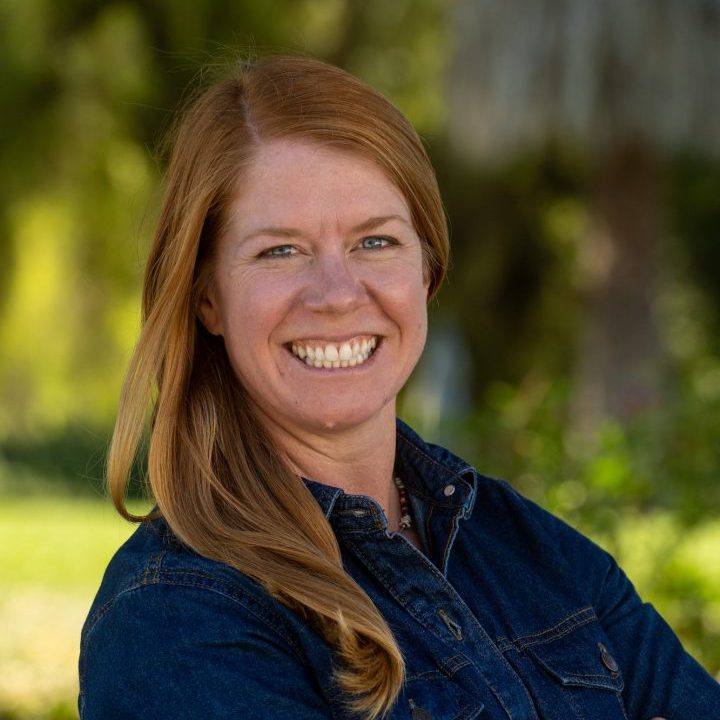
Elizabeth Vaughan
Senior Manager, Small Farm Tech Hub
Sharing tech & business solutions to make purchasing local food more accessible and competitive.
Get involved
Interested in getting more involved in the Small Farm Innovation Challenge as a judge, promotional partner, or sponsor? We’d love to hear from you!
Or contact techhub[at]caff.org | 619-333-8412